
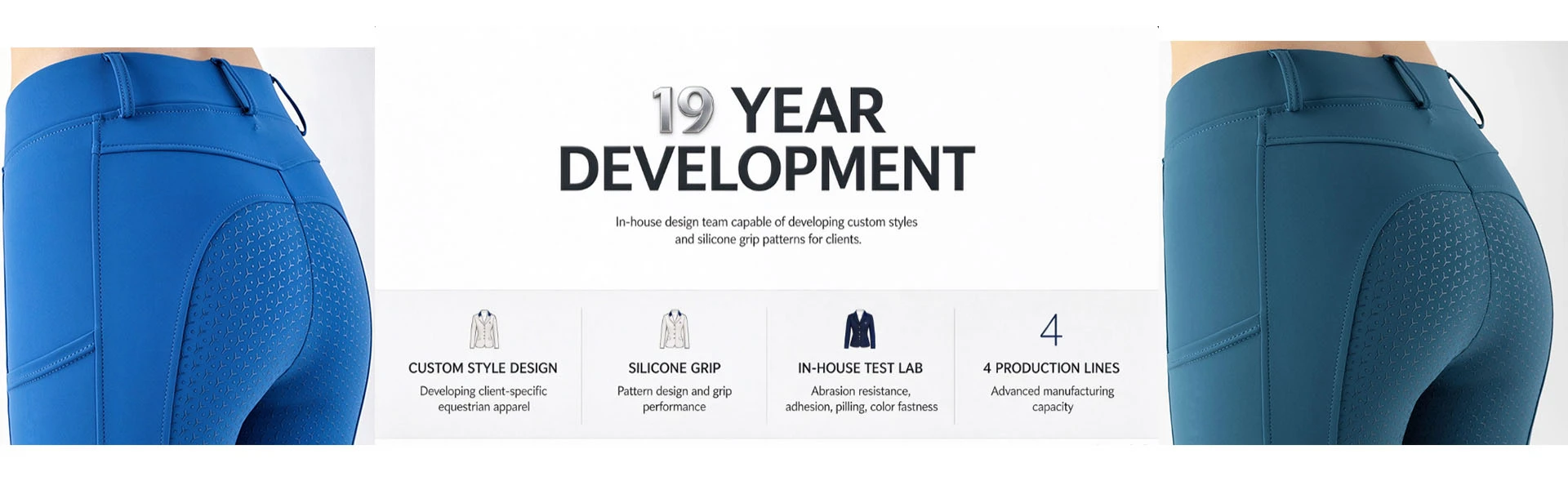
In the world of equestrian sports, a good pair of riding pants isn't just about fashion - it directly impacts comfort, movement, and performance. Especially for male riders, the anatomy and riding style call for thoughtful design adaptations. Off-the-rack pants often fail to offer proper support in the waist, hips, and inner thigh areas, leading to discomfort or even risk during intense riding.
This article explains why men's riding pants require customized fit and specific structural adjustments, with comparisons to standard sizes and suggestions for optimal design.
1. Why Fit Matters More in Men's Riding Apparel
Men typically have broader waists, flatter hips, and different muscle distribution compared to women, meaning standard equestrian pants - often designed with a unisex cut - may not offer enough support or room where it's needed most.
Common issues men face with standard riding pants:
- Waistbands that slip or cut into the abdomen
- Tightness in the crotch due to lack of stretch
- Poor alignment of knee patches during movement
- Thigh tension causing restricted motion and fatigue
For men, a truly well-fitting riding pant not only improves posture and comfort but also enhances safety and long-term wearability.
2. Comparison: Standard Sizes vs. Tailored Fit
| Feature | Standard Riding Pants | Custom-Fit Men's Riding Pants |
|---|---|---|
| Waist Fit | Often too tight or too loose | Tailored waistband contour, more support without squeeze |
| Crotch Area | Limited space, causes pinching or bunching | Optimized gusset design for freedom and circulation |
| Knee Position | Misaligned patches reduce control | Precisely mapped to rider's leg length and bend angle |
| Thigh Room | Muscle tightness due to slim cut | Added volume or stretch zones to match male muscle lines |
| Seat Area | Flat structure lacks support | Slightly contoured rear for better contact and comfort |
3. Key Customization Areas for Male Riders
Waistband Design
- Slight V-cut or high-back designs help prevent slippage
- Partial elastic waist inserts allow freedom while maintaining structure
Inner Thigh Zone
- Use of four-way stretch fabrics to accommodate strong adductor muscles
- Seamless or flat-lock stitching reduces chafing
Crotch & Seat Structure
- Diamond or U-shaped gussets reduce tension and avoid pinching
- Reinforced seat area for more saddle contact and comfort during long rides
Knee and Calf Adjustment
- Pre-bent knee cuts to follow the riding stance
- Adjustable leg openings for easy boot layering and firm grip
4. What Happens If Pants Are Not Optimized
Without thoughtful design, male riders often experience:
- Groin discomfort or numbness after long rides
- Pants sliding down or twisting while in motion
- Quick fabric wear at high-friction zones (crotch/thigh/seat)
- Compromised control due to poor patch positioning
In competition or training, this can translate to poor posture, reduced grip, or even safety hazards during jumps or fast movements.
5. Final Thoughts: Riding Better Starts with Dressing Better
Custom-fit riding pants for men aren't a luxury - they're a necessity for serious performance and long-term comfort. As more equestrian brands recognize gender-specific needs, offering men's designs with better support, materials, and functional tailoring will no longer be optional.
If you're a brand, designer, or rider yourself, investing in male-specific riding pants is investing in both form and function. It's time we tailored comfort, performance, and style into every ride.